

Hot Rod Insurance
What This Page Covers
- What defines a hot rod and how it differs from street rods, rat rods, and stock classic cars.
- Common hot rod styles discussed on the page, including gassers, Pro Street builds, and T-Buckets.
- Why standard auto insurance may not reflect the value, modifications, parts, or repair needs of a customized hot rod.
- How performance, style, and functional modifications can affect vehicle value and coverage considerations.
- Discussion of agreed-value coverage, limited-use driving, specialty repairs, and quote options for hot rod owners.
Why This Matters
- Hot rods often combine extensive customization, specialized parts, and skilled labor that may not be captured by factory-based valuation.
- Engine swaps, suspension work, custom bodywork, interiors, fabrication, and other upgrades can materially affect repair costs and insured value.
- Agreed-value coverage can establish an insured amount in advance, which may help reduce uncertainty after a covered total loss.
- Limited-use collector coverage may better match vehicles driven mainly for weekend trips, shows, cruise-ins, and other enthusiast use.
- Coverage features, eligibility, mileage, storage requirements, limits, and availability can vary, so current policy terms should be confirmed.
Key Actions You Can Take
- Document your hot rod’s modifications, parts, restoration or build work, and current condition before requesting coverage.
- Review whether your current policy reflects the vehicle’s agreed value rather than relying only on standard depreciation methods.
- Explain how the hot rod is stored and driven, including expected mileage and whether it is used for shows, events, or recreational driving.
- Ask how custom parts, specialized repairs, spare parts, and major performance upgrades would be handled under the policy.
- Request a personalized quote or speak with a collector-car insurance specialist to confirm eligibility and current coverage terms.
 Hot rods are built, not bought. Every detail reflects performance, craftsmanship, and personal style. These vehicles aren’t just a mode of transportation; they’re often heavily modified, making standard car insurance rarely a fit.
At Classic Auto Insurance, we offer hot rod insurance designed specifically for classic cars and modified vehicles. As a custom car insurance company focused on unique vehicles, we insure hot rods with agreed-value coverage and flexible usage terms. To speak with an experienced insurance agent or request a quote, call (888) 901-1338.
What Makes a Hot Rod Different From Street and Rat Rods
 A hot rod is typically a classic vehicle (often pre-1949) modified for performance, handling, and visual impact. These builds prioritize power, drivability, and craftsmanship, setting them apart from stock classic cars.
Street rods lean toward comfort and modern convenience, while rat rods intentionally embrace unfinished aesthetics. Hot rods, by contrast, are performance-driven custom cars that often feature aftermarket parts, custom modifications, and upgraded safety features.
Those differences directly affect collector car insurance coverage, vehicle value, and how agreed value policies ensure proper protection in the event of a claim.
Types of Hot Rods We Insure
Classic Auto Insurance works with owners across the hot rod community, offering custom car insurance as part of a broader service built for enthusiasts and collectors.
As a specialty business, we insure a wide range of hot rods and collector vehicles, helping owners stay protected in the event of an accident.
These are some of the most common builds we see, but they are far from the only models or styles we insure.
Gassers
 Inspired by vintage drag racing, gassers are instantly recognizable for their raised front suspensions, lightweight bodies, and aggressive stance.
Built for straight-line speed, these hot rods often feature high-output engines and stripped-down designs that reflect their competition roots.
Today, gassers remain popular among builders who value performance and period-correct style.
Pro Street
Pro Street hot rods blend show-level presentation with serious horsepower, making them standouts at events and gatherings hosted by local car clubs. Wide rear tires, custom chassis work, and heavily modified drivetrains define these builds.
Their visual impact and engineering detail make them favorites at cruise-ins and performance-focused showcases.
T-Buckets
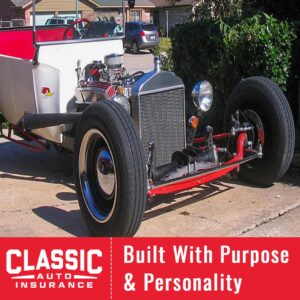
Lightweight and highly customized, T-Buckets showcase exposed engines, minimal bodywork, and bold design choices that put craftsmanship on full display. These hot rods are staples at car shows, where their unique proportions and creative builds draw attention.
Because no two T-Buckets are alike, owners often rely on guaranteed value and agreed value policies to ensure the vehicle’s true worth is fully protected.
Why Hot Rods Need Modified Car Insurance
Standard auto insurance is built around depreciation and factory specifications, neither of which applies to hot rods. These vehicles require specialized policies designed to account for custom parts and unique needs.
The right coverage delivers better protection, from minor repairs to a covered total loss, backed by guaranteed value and access to specialty repair shops.
Several factors influence how that protection applies, especially on heavily modified vehicles.
Performance Modifications
Engine swaps, forced induction, braking upgrades, and suspension changes significantly increase performance and complexity of repairs.
These upgrades often rival or exceed those found in high-output muscle cars, pushing hot rods far beyond factory specifications.
Proper coverage accounts for how these modifications affect value and repair costs, and how insurers pay claims after a loss.
Style Modifications
 Custom paint, interiors, bodywork, and fabrication often require hundreds of hours of skilled labor and a significant amount of money invested in a build.
These visual elements are a primary reason hot rods stand out at car shows and automotive events, but they also raise questions about value and premiums if coverage isn’t structured correctly.
Agreed value insurance ensures the amount is agreed upon in advance, reducing disputes and uncertainty after a total loss. Unlike standard policies that factor in depreciation, agreed value coverage pays the full insured amount when a covered loss occurs.
Functional Modifications
Frame changes, fuel systems, driveline upgrades, and spare parts all affect how a hot rod performs and how claims are handled.
Many owners rely on specialized components, custom fabrication, and professional-grade automotive tools to keep their vehicles running properly.
Modified car insurance is designed with these details in mind, giving customers coverage that reflects how their hot rods are actually built, used, and maintained.
Classic Auto Insurance for Custom Cars
 Hot rods are classic cars built with purpose, personality, and expert knowledge. Insuring them properly means choosing hot rod insurance designed for custom cars, limited-mileage use, and true collector-car value.
If you own a hot rod or are insuring a collector vehicle, contact Classic Auto Insurance at (888) 901-1338 to discuss coverage options guaranteed to protect your one-of-a-kind investment.
How much does it cost to insure a collector?
 Collector car insurance costs depend on multiple factors, including the vehicle’s agreed value, how often it’s driven, where it’s stored, and the extent of any modifications.
Many collector vehicles (such as those insured under hot rod insurance or high-performance builds like muscle cars) often cost less to insure than daily drivers because they’re driven less and present reduced risk.
Additional coverage is available, such as spare parts coverage, making the overall service more complete for specialty vehicles.
How much does the average person spend a month on car insurance?
 The average person spends several hundred dollars per month on standard car insurance, depending on location, driving history, and the type of vehicle insured.
Prices are typically higher for vehicles driven daily, heavily modified vehicles, or those without secure storage or a locked garage, which is why specialty vehicles often require different insurance coverage than standard policies.
What do insurance companies consider low mileage?
Most insurance companies consider low mileage to be well under standard daily driving limits, often a few thousand miles per year for collector car policies.
With classic car insurance, mileage limits reflect how customers actually use their vehicles, typically for weekend drives, events, and car shows, rather than everyday commuting. This limited use reduces risk.
Why can’t I qualify for car insurance?
You may not qualify for car insurance due to driving history, vehicle use, storage conditions, or policy provisions that don’t align with collector or modified vehicles.
In some cases, insuring high-performance builds through standard classic car insurance carriers may result in higher premiums or disqualification if the vehicle doesn’t meet underwriting guidelines.
Common Questions and Answers for Hot Rod Insurance
Can I insure a hot rod that is still being built or restored?
In many cases, a collector vehicle that is not yet drivable may still be eligible for specialty coverage, but the policy needs to reflect its current condition, value, and stage of restoration. Classic Auto Insurance advises owners to ask about protection for storage, transport, parts, and ongoing restoration work. Eligibility and coverage terms should be confirmed for the specific hot rod.
What storage requirements apply to hot rod insurance?
For hot rod insurance, the vehicle generally needs to be stored in a fully enclosed and locked garage when it is not in use. Carports, temporary or zip-up garages, and vehicles stored outside under a cover are not considered acceptable storage.
If you take your hot rod to an overnight car show or event, coverage can remain in force while the vehicle is away from its normal garage. Specific storage arrangements and policy terms should be confirmed during the quote process.
Can I use my hot rod as a daily driver or for commuting?
No. A hot rod generally cannot be used as a daily driver or for regular commuting. The vehicle is intended primarily for limited or pleasure use, such as weekend drives, car shows, cruise-ins, and other enthusiast activities.
You’ll also generally need another vehicle for regular transportation. Specific mileage and usage terms can vary by policy, so confirm how you plan to drive your hot rod when arranging coverage.
What should I do if my hot rod increases in value after the policy starts?
Collector vehicles can increase in value as restoration work is completed, new modifications are added, or market conditions change. Classic Auto Insurance recommends reviewing the agreed value regularly and updating documentation such as appraisals, receipts, photos, and build records when appropriate. Some policies may include inflation protection, but availability and terms should be confirmed.
Is my hot rod covered while being transported to a show, auction, or event?
Transport-related protection depends on the policy and how the vehicle is being moved. Classic Auto Insurance advises owners to ask whether their collector policy includes protection while a vehicle is being shipped or trailered to a show, auction, or event. Confirm coverage for the hot rod, loading and unloading, and any trailer or transport arrangements before the trip.
How should I document modifications when insuring a hot rod?
When insuring a hot rod, fully document all modifications and alterations made to the vehicle. Classic Auto Insurance specifically identifies modification documentation as part of its eligibility requirements.
Keep detailed records such as photos, receipts, invoices, build sheets, and information about custom parts or upgrades. This documentation can help establish the hot rod’s condition and value and ensure significant modifications are considered when determining the appropriate agreed value and coverage.
Can I choose a specialty repair shop after a covered hot rod claim?
Yes. After a covered hot rod claim, you can select the repair facility that will handle the repairs. This can be especially important for a customized hot rod that may require a specialty shop familiar with aftermarket components, custom fabrication, paint, or other modifications.
Repair costs and authorization remain subject to the terms of your policy and the specific claim, so coordinate with your claims representative before repairs begin.
What information should I have ready when requesting a hot rod insurance quote?
When requesting a hot rod insurance quote, have details ready about your vehicle’s year, make, model, build, condition, modifications, and estimated value. Photos, receipts, appraisals, and records for custom parts or upgrades can also help document how the hot rod was built and valued.
You should also be prepared to provide information about annual mileage, intended use, storage arrangements, and the drivers who may operate the vehicle. Classic Auto Insurance requires modifications to be documented and generally expects the vehicle to be stored in a fully enclosed, locked garage when not in use.
Having these details available can help Classic Auto Insurance determine eligibility and discuss appropriate coverage options for your hot rod.